Early design choices in construction have an outsized influence on a project’s success. Industry data shows that major projects often run 20% longer than planned and 80% over budget – largely due to issues that trace back to decisions (or indecisions) made in the concept phase.
In other words, what you decide (or overlook) in those first sketches can set the course for either a smooth delivery or a cascade of costly problems down the line. Let’s explore why these early-stage decisions carry so much weight, why traditional workflows struggle with early-phase uncertainty, and how “front-loading” the design process (with a little help from AI) can dramatically improve outcomes.
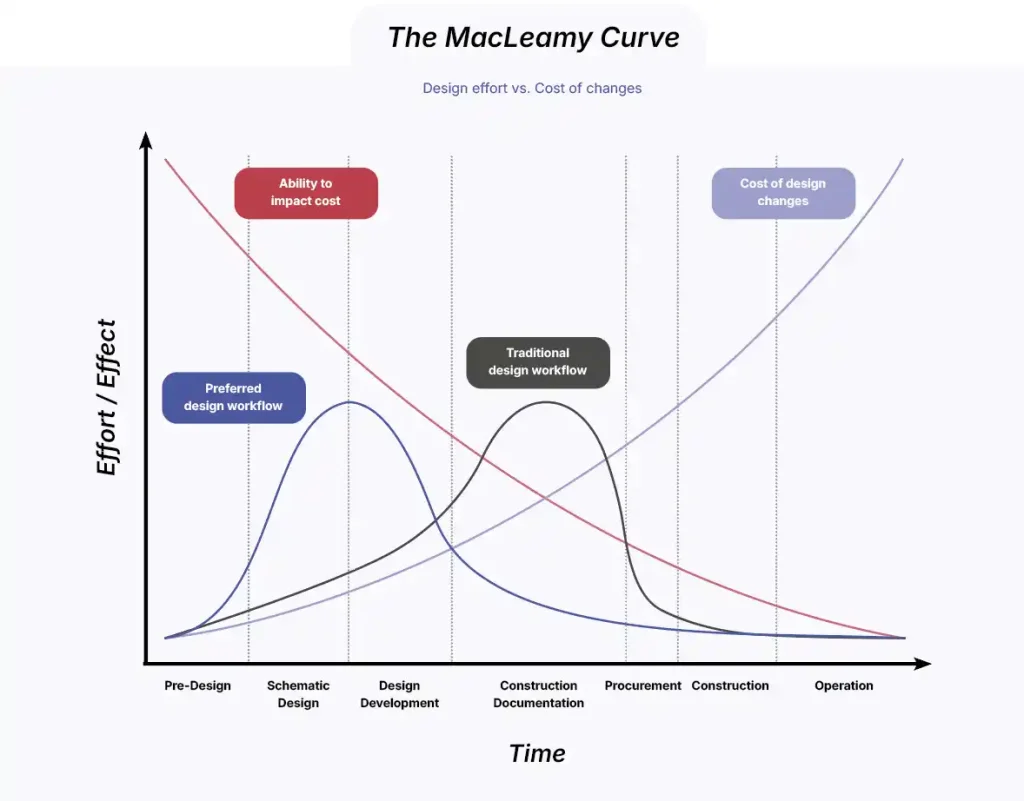
In this diagram, the cost of making changes skyrockets as a project moves from concept to construction, while the ability to influence outcomes plummets. Front-loading the design effort – shifting more problem-solving to the early concept phase – takes advantage of the low cost of change at the beginning. By making key decisions when the design is most malleable, teams can avoid the expense and headache of late-stage design changes.
The Traditional Workflow Challenge
Why aren’t we always front-loading our decisions if it’s so beneficial? The truth is, traditional AEC workflows make early decisions hard. In a conventional process, architects create a concept with limited information, then hand it off to engineers, who then involve contractors and cost estimators much later.
Each discipline works in its own silo initially. Unsurprisingly, this reactive sequence means issues surface late: design conflicts, budget overruns, compliance problems – you name it. As our white paper notes, “late-stage fixes remain one of the biggest contributors to time and cost overruns” in construction. Teams often end up firefighting issues that could have been resolved much earlier with better up-front coordination.
Another challenge is the high uncertainty during concept design. Architects may be unsure if an idea will meet structural requirements or budget constraints, yet they have to propose something. Traditional tools offer little support here – there’s no easy way to test dozens of scenarios or instantly check a concept against all regulations.
It’s no wonder teams sometimes defer tough decisions until they “have more information,” but by then the design is harder to change. This catch-22 has long limited the adoption of front-loading, which “requires a level of coordination, information access, and expertise that traditional tools simply can’t support” as noted in the aforementioned white paper.
Front-Loading to Reduce Rework and Risk
“Front-loading” means bringing decision-making and analysis forward into the early stages of design. Instead of waiting for detailed design or construction to discover problems, the idea is to address issues before they snowball. By investing more effort upfront – during concept and schematic design – you can catch mistakes when they’re easiest (and cheapest) to fix.
What are the payoffs of front-loading? The white paper outlines several clear benefits:
- Less rework later: Early clash detection and validation mean fewer design errors make it to site, so teams avoid costly do-overs and change orders.
- Lower costs: Solving problems on paper saves money. In fact, design errors caught late can add around 14% to total project cost, so finding them early significantly cuts waste.
- Shorter schedules: With better early coordination, there are fewer delays down the line. The project timeline tightens because you’re not pausing to fix surprises in advanced stages.
- Reduced risk & higher quality: Front-loading encourages considering safety, quality and even sustainability from the start. For example, making key material choices early can improve a building’s carbon footprint and performance, rather than retrofitting fixes afterward.
In essence, front-loading de-risks a project. When you’ve hashed out the big decisions and resolved major uncertainties in the concept phase, everyone can proceed with much more confidence. There’s less contingency spending and fewer “uh-oh” moments on site because most issues have been ironed out on the drawing board.
AI – A Confidence Booster in Early Design
If front-loading is so great, why isn’t it universal? Historically it’s because teams lacked the tools to predict and evaluate outcomes early on. This is where artificial intelligence is changing the game. Modern AI solutions can analyse designs, check compliance, and even generate optimised options before you commit to them – essentially serving as a tireless advisor during early design when uncertainty is highest.
Being data-driven in early design is key. Instead of relying on gut feeling alone, teams can leverage project data and past experience to inform choices. For example, Tektome’s KnowledgeBuilder tool lets architects and engineers tap into lessons learned from previous projects – mining old drawings, reports and “lessons learned” logs for relevant insights. This means you don’t repeat mistakes from the past; you design with the benefit of collective hindsight. Likewise, ReqManager centralises building codes, client requirements and standards in one live repository, acting as a “rulebook” that the team (and AI assistants) can consult at any moment.
Having all these requirements at your fingertips from day one ensures your concept is compliant and aligned with stakeholder expectations from the get-go.
Importantly, none of this means removing human creativity or control. Think of AI as a safety net and guide during early design – it flags issues, runs numbers, and suggests improvements, but the architect and engineers are still in the driver’s seat.
Conclusion
Early design decisions truly make or break construction outcomes. A proactive, front-loaded approach can save immense time, cost, and frustration by resolving uncertainties when changes are easiest. With new AI-powered tools to support this shift, AEC teams can finally mitigate the age-old risks of the “fix it later” mentality. The result? Projects that hit their targets with far fewer surprises, and teams that spend more time designing and less time firefighting.
If this resonates with you, now is a great time to deepen your understanding of front-loading and AI in construction. Download the full white paper “Front-Loading Construction: How Agentic AI & Swarm Agents Empower Early Design Decisions” to explore in detail how early decision strategies and multi-agent AI can transform your project outcomes.