Dubai one week, Copenhagen the next, and two markets that could hardly be more different. Here is what we took to both, who we met, and what we are bringing home.
From Dubai to Copenhagen.
Construction Technology ConFex ran on 9 and 10 September at the Conrad Hotel in Dubai, co-located with its property technology and data centre sister events, so owners, contractors, consultants and operators shared one floor. It was our first step into the Gulf. A week later, BIM World Copenhagen filled K.B. Hallen on 16 and 17 September, an event that brings together more than 2,500 professionals across four stages under the theme of turning digital ambition into real-world impact.
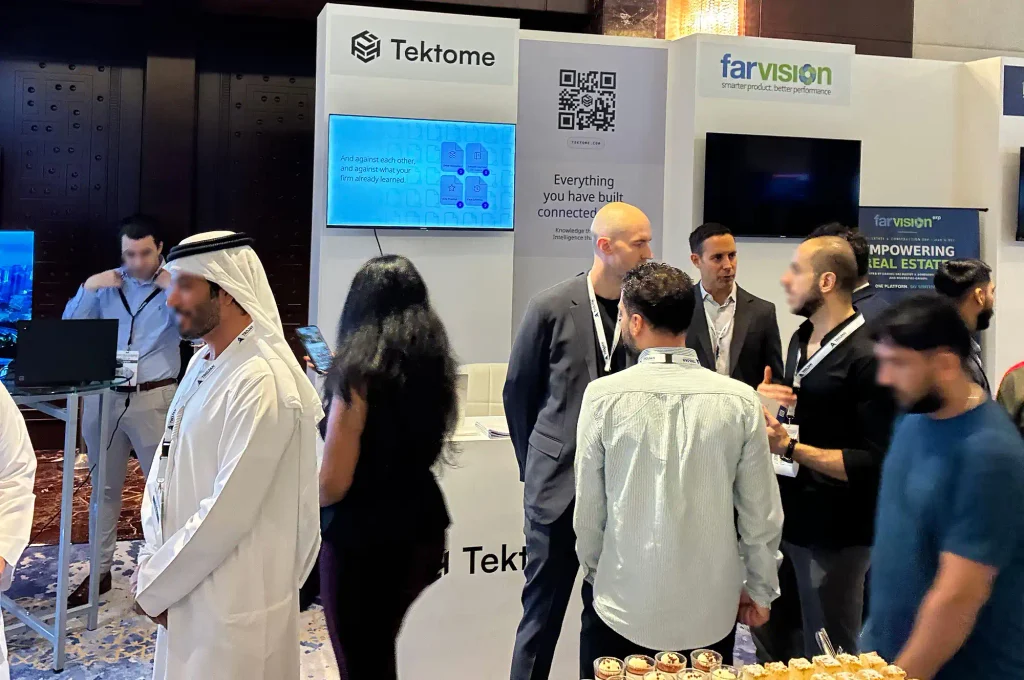
What we brought to the stand.
The same platform in both cities. Tektome is a multi-intelligence platform for project assurance. It reads the drawings, models, specifications, reports and correspondence a project already holds, reviews the whole package against statute, the client brief and your own standards, and puts the risk in view with a citation behind every finding. On the stand, we walked through the reviews most firms start with.
The six reviews on the screen
- Risk and review coverage. A status against every requirement, with blind spots surfaced as a ranked list before sign-off.
- Compliance and code review. Live status per requirement, with the citation behind every finding.
- Coordination validation. Drawings, models, specifications and submissions reviewed against each other.
- Deliverables and information delivery. Tracked against brief, EIR and programme.
- Commercial and change control. Variations tested before sign-off.
- Design maturity and stage readiness. Commit with the gaps visible.
It all runs on more than 50 review templates, extended with your own standards, and your data stays yours. In short, sign your next submission with the evidence in hand.
In Dubai, the right people asked the right question.
For a brand few in the region had heard of a fortnight earlier, the engagement was encouraging. We spoke with developers, contractors, consultancies and government bodies from the UAE, Saudi Arabia and Qatar, and a good share of them worked directly in BIM or information management.
of the people we met in Dubai were managers, senior specialists, heads of department, directors or C-level executives.
Nearly everyone asked the same thing first. Is this using AI? Several told us they already use AI in some form, which says a lot about the market’s maturity and meant we could get into the detail quickly. The themes that came up most were design review, code compliance, information management, portfolio oversight, risk review, cost management and change control. It also helped that the catering sat close to the stands, which kept people, and conversations, flowing.
Copenhagen came at it from the sustainability angle.
Copenhagen felt different, and it was meant to. BIM World draws a wide mix of students, software developers and practitioners from large firms who are earlier in their careers and keen to learn, alongside the BIM managers we usually talk to. The conversations were more exploratory, and two themes stood out.
The first is sustainability. It is taken seriously in the Nordics in a way that shows up in process, not only in policy, and sustainability certification audits look a lot like the evidence-based review we build for. The second came from manufacturers, who hold decades of drawings and need to find, reference and learn from them every time a refurbishment comes around. That is an information problem before it is a BIM problem, and it is one we can help with.
Denmark is a compact market, but a well-connected one, with active alliances and open standards, and it opens onto the wider Nordics.
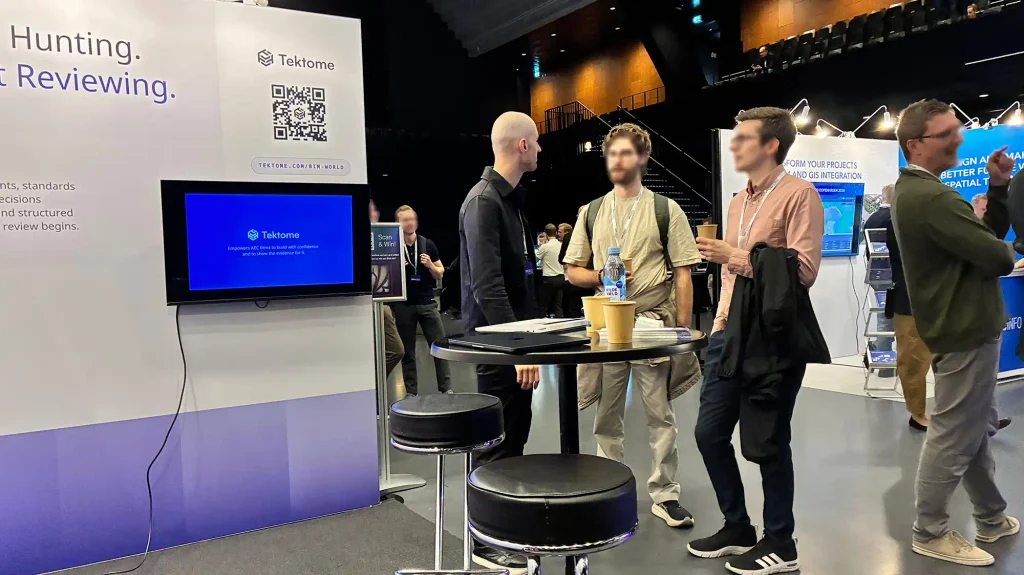
What we learned.
Some lessons are specific to a region. Others we will carry to every event from here on.
- One place, not many tools. People want AI to look after a process, or a whole project, from start to finish in a single place, rather than stitching results together across several point solutions.
- The appetite is for end to end. A tool that reviews one thing well earns interest. A platform that carries a project from first requirement to final sign-off is what people described actually wanting.
- AI is already in the room. Almost everyone we spoke to was using AI in some capacity, or had a clear picture of where it could solve a problem for them. The question has moved from whether to where.
- In the Gulf, business is built face-to-face. Interest can start with a remote demo, but trust is built in the room, over workshops and repeat visits, and buyers look for a visible, long-term commitment to the region before they commit themselves.
Key takeaway
Interest in AI-assisted review is no longer the hard part in either market. The hard part is being present enough, locally and consistently, to turn that interest into work on real projects.
What happens next.
We are following up with everyone we met in both cities, and working out what a proper presence in the Gulf looks like beyond occasional visits. In the Nordics, we are getting to know the community properly before deciding where to be next year. If you stopped by either stand, thank you. If you meant to and missed us, the offer stands.

Missed us in Dubai or Copenhagen?
A 30-minute session on a scheme we have prepared, or on the problem you would have described at the stand. Nothing to set up, no project data needed.