
If you work in UK buildings today, you can feel the shift: compliance is something you’re expected to prove, continuously, as designs evolve, teams change, and requirements pile up.
And that reality is colliding with another trend – sustainability goals (carbon, air quality, health, wellbeing) are becoming just as non-negotiable as traditional building regs, yet they’re often managed through a messy mix of PDFs, spreadsheets, meeting notes, and half-remembered decisions.
So let’s talk about what’s actually happening on the ground, and why automated design checking is moving from “nice to have” to “table stakes”.
Building safety reform has raised the bar on proof
The UK’s post-Grenfell reforms have introduced a new burden of evidence, especially for higher-risk residential buildings. What many teams are discovering is that the hardest part is assembling and maintaining the chain of evidence over time.
Arup put this plainly when describing the Higher-Risk Building (HRB) safety case process: without detailed guidance, they developed their own methodology to help dutyholders meet new responsibilities.
That one detail matters is that even top-tier firms are having to create structured approaches just to keep up with the evidence requirements. This is exactly where automated checking starts to make sense – not as “automation for automation’s sake”, but as a way to make compliance traceable as the model changes.
Sustainability targets are “met” early… then drift quietly
Most teams can produce a compelling sustainability narrative at concept and planning stage. The challenge comes later: design development adds complexity, value engineering alters specifications, teams change, and gradually the original commitments weaken.
Industry evidence presented to a UK parliamentary committee reflects a familiar pattern: planning decisions often focus on meeting minimum legal thresholds, while issues like air quality are addressed reactively late in the design process.
In simple terms, sustainability becomes something you “patch” rather than something you continuously validate.
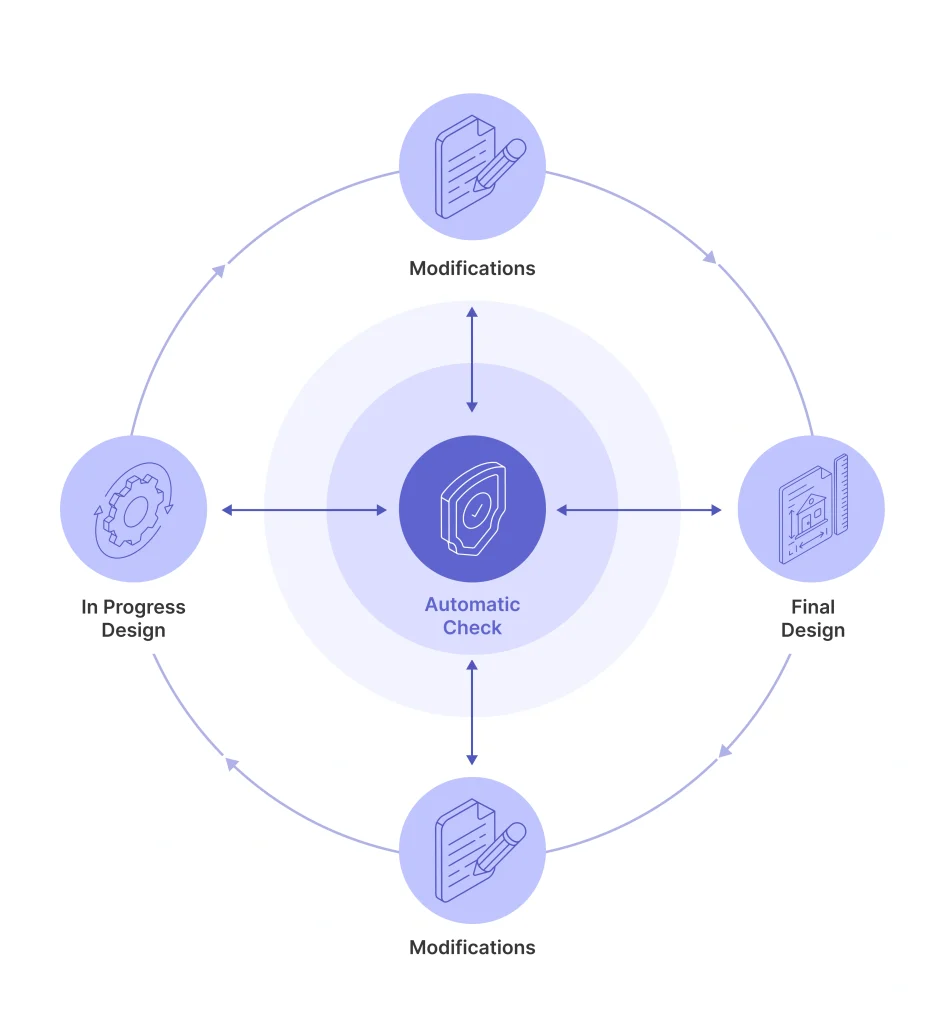
Automated checking changes this dynamic by treating sustainability requirements like any other design constraint — explicit, testable, and repeatedly verified as the model evolves.
BIM has improved coordination but checking is still too manual
BIM absolutely helps multidisciplinary coordination. But there’s a dirty secret: a lot of model compliance checking is still manual, inconsistent, and dependent on individual diligence.
For example, Arup’s BIM services page explicitly points to the need for automation, noting they developed automation tools to reduce “repetitive and mistake-prone tasks” and to automate checking to improve model and documentation quality.
It emphasises an industry bottleneck: if checking relies on humans manually running through long lists of rules and exceptions, things are very likely to slip.
The real pain is aligning regulations, client demands, and evolving decisions
Here’s the day-to-day reality on most UK building projects:
- Building regs and guidance evolve and interpretations vary.
- Client requirements change (“we need more lettable area”, “we need more daylight”, “we’re switching system X to system Y”).
- Internal standards differ by discipline, team, and office.
- Decisions get made in meetings… then lost in meeting minutes.
You end up with a constant alignment problem: what exactly are we checking against today? And where is that requirement recorded, with context, owners, and history?
This is why “automated design checking” can’t just mean clash detection. It has to include rule-based validation across multiple requirement sources – regulatory, client, and internal standards – and it has to keep a record of what was checked, when, and why.
Digital review tools are faster but they don’t solve validation
Many firms have made major progress digitising review workflows. One case study reports cutting design review times by as much as 60% while maintaining quality.
That’s excellent, but it’s also the point: speeding up review does not automatically create verification.
Digital mark-ups and coordination platforms help teams collaborate, but they still depend on humans to remember every rule, interpret every edge case, and spot every non-compliance across drawings, schedules, and models.
Automated checking complements collaboration tools by doing the boring-but-critical work continuously, so humans can focus on judgement.
The next decade’s winners will embed automated validation into the workflow
In the next ten years, the differentiator won’t be “who has BIM”. Everyone has BIM.
The differentiator will be: who can validate design intent, compliance, and sustainability targets continuously, directly against the evolving model, with auditable evidence.
That means:
- checks that run early and often (not only at stage gates)
- checks that cover BIM + PDFs
- checks that adapt to real-world messiness (naming conventions, model variations, incomplete data)
- checks that generate a clear, shareable record for project teams and regulators
This is the direction we’re building towards at Tektome: an approach where teams can upload design files and review automated check results in one place, rather than relying on scattered manual processes.
We’re also focused on making checks easier to define and scale, including language-based ways of expressing checking intent, so teams can expand coverage without turning every new rule into a long IT project.

